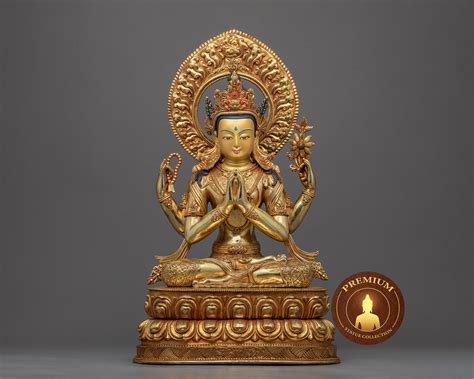
Avalokiteshvaraya, le Bodhisattva de la grande compassion, est l’un des plus connus des Bodhisattvas de la tradition bouddhiste. Au Village des Pruniers, au début de chaque grande retraite, son nom est chanté et invoqué comme une prière, répétée continuellement pendant vingt minutes, afin d’éveiller l’énergie de compassion en chacun de nous et de la transmettre à tous les êtres vivants. Cette pratique dépasse le cadre d’une simple dévotion religieuse ; elle constitue une véritable plongée dans les profondeurs de la conscience humaine pour transformer la souffrance en compréhension.
Les fondements du chant Namo Avalokiteshvara
Le chant Namo Avalokiteshvara n’est pas seulement une prière mais aussi une pratique de méditation sur la compassion, nous permettant de regarder profondément en nous grâce aux énergies de pleine conscience, de concentration et de vision profonde. Le mot « Namo » évoque l’idée de « prendre refuge », « revenir chez soi », avoir la capacité à revenir au moment présent. Le nom « Avalokiteshvara » est le nom du Bodhisattva invoqué, la Bodhisattva de la grande compassion. C’est l’idée de savoir regarder profondément avec les énergies de la pleine conscience, de la concentration et de la vision profonde, afin de développer plus de compréhension, la compréhension que la vie est disponible ici et maintenant, que notre vraie demeure et notre bonheur véritable sont déjà en nous, sont entre nos mains, la compréhension menant à la compassion.
Il est considéré comme une émanation du grand bouddha Amitabha. Avalokiteshvara incarne l’une des deux principales qualités du bouddha, la Compassion (Karunâ), d’où le surnom de Mahâkarunâ, (Infinie Compassion), qu’on lui attribue souvent. L’autre qualité essentielle de l’état de bouddha est la sagesse (Prajnâ), incarnée par le bodhisattva Manjushri. Leur objectif est d’aider d’abord les autres êtres sensibles à s’éveiller, retardant sa propre libération jusqu’à ce qu’il ait aidé chaque être sur terre à atteindre le nirvana. Son infinie compassion se manifeste par un pouvoir miraculeux qui lui permet de secourir ceux qui l’invoquent dans le danger.
La dynamique de la souffrance et de la guérison
Le Bouddha nous a enseigné qu’il y a un lien profond entre la souffrance et le bonheur. Et selon la formulation de notre Maître Thây, la boue et le lotus ont besoin l’un de l’autre, ils ne peuvent être séparés. Et donc en reconnaissant, en acceptant et en embrassant la souffrance, nous cultivons la compréhension et la compassion. Lorsque les moines chantent le nom d’Avalokiteshvaraya, pour la première fois, ils retournent en eux-mêmes pour toucher la souffrance qui est en eux. Et lorsqu’ils chantent le nom pour la deuxième fois, ils prennent conscience de la souffrance des personnes qui les entourent. Et lorsqu’ils le chantent pour la troisième fois, ils entrent en contact avec la souffrance du monde entier, l’embrassant tendrement avec l’énergie de la compassion.
Namo Avalokiteshvara is one of the most loved Plum Village chants. We shall begin today with chanting. And everyone is invited to participate in the practice of listening. If you know how to go back to yourself and listen to the suffering inside, you can get enlightenment. You understand your suffering. You understand the suffering of your father, your mother, and your ancestors. You understand the suffering of your people, your country. And when compassion arises, you suffer less right away. Now you can look at the other person with compassion. You don’t suffer anymore when you look at him or her and can see the suffering in that person. You don’t blame. You are not angry at him or her anymore. Because in your heart there is already compassion. So instead of trying to punish him, you have the intention to do something or to say something to help the other person to suffer less. You can listen to that person with compassion. You can do many wonderful things like that, just because you are able to understand your own suffering.
L'importance de l'écoute intérieure
First, he goes back to himself and listens to the suffering inside of him. This is a very important practice because many of us do not want to listen to our own suffering. That is why you do not have a chance. There are many spots in the world where people suffer very deeply. Not only because of war; because of separation, of natural catastrophes. They suffer also from social injustice or oppression, and violence. The practice of listening to the suffering is to give a chance for compassion to arise. When compassion arises, you feel better, you suffer less. It can happen very quickly. That is the practice of mindfulness of suffering. You are mindful of your own suffering. You are mindful of the suffering of the other person. You are mindful of the suffering of the world.

When we sit and listen, we can do very much the same. We don’t have to chant aloud. We follow our in-breath and out-breath, and we go back to ourselves. We are not afraid of being in touch with the suffering inside. “Oh, my dear pain, my dear suffering, my dear sorrow. I know you are there. I’m not running away from you anymore. That is what we practice. We go home and allow ourselves to be embraced, allow our suffering to be embraced by ourselves. When we hear the chanting for the second time, we are aware that the people around us have suffering also. And then, when we hear the chanting for the third time, we know that in the world people suffer very much. And we want to be in communication with them.
La gestuelle et l'énergie collective
Why does Thay make finger movements during the Avalokiteshvara chant? The practice is to allow ourselves to be here. Not to be taken away, pulled away by our thinking. Because if we sit here thinking, our thinking will take us elsewhere. That is why it is very important to stop thinking. Just to focus our attention on the chanting. You are breathing in, breathing out, and you stay with the chanting. And our mind can stop thinking. We just feel the energy - the collective energy of the sangha. The energy of mindfulness, the energy of compassion generated by the chanting. And we allow our body to be relaxed and to be open, so that the collective energy of the sangha can penetrate into our body. This is very important. Not to think. Open our body and allow the energy of mindfulness and compassion to penetrate into our body. We can do that. And if we can do that, then a few minutes later there will be a change. The tension in our body, the pain in our body will go away.
La transformation par l'ouverture du cœur
Chanting is not exactly praying, no. Chanting is to touch the suffering [in order] to allow compassion and understanding to arise. And when we do that together, the collective energy of compassion and mindfulness will be great. There is tension and pain in our body. If we allow our body to be embraced by the energy of mindfulness and compassion, we can release the tension and reduce the pain very easily in just a few minutes. And we will feel much better after a few minutes of listening. If you have some pain and sorrow or anger or fear in your heart, try to open your heart so that the energy of the sangha can penetrate into your heart. Don’t keep it for yourself. Open! “Dear sangha, I’m here. I have pain, suffering, fear, and despair in me. Please, help embrace these blocks of pain in me. So if you can open your heart and allow the energy of the sangha to penetrate and embrace your pain and your sorrow, you will feel better after a few minutes of listening.

This is a matter of energy. We just think of that person or call the name of that person silently in our mind. And then this energy generated by the practice will be channelled to that person right this morning. Avalokitesvara is a person who knows how to listen to the suffering inside and outside. And he got transformation and healing because of that practice. And we feel that the bodhisattva is in us, not outside of us. It is in us. He is in us. Chant invoquant le nom du Bodhisattva. Avalokiteshvaraya, le Bodhisattva de la grande compassion, est l’un des plus connus de tous les Bodhisattvas de la tradition bouddhiste. Au Village des Pruniers, son nom est invoqué comme une prière, répétée continuellement pendant vingt minutes, afin d’éveiller l’énergie de compassion en chacun de nous et de la transmettre à tous les êtres vivants. Lorsque les moines chantent le nom d’Avalokiteshvaraya, pour la première fois, ils retournent en eux-mêmes pour toucher la souffrance qui est en eux. Et lorsqu’ils chantent le nom pour la deuxième fois, ils prennent conscience de la souffrance des personnes qui les entourent. Il est considéré comme une émanation du grand bouddha Amitabha. Avalokiteshvara incarne l’une des deux principales qualités du bouddha, la Compassion (Karunâ). Leur objectif est d’aider d’abord les autres êtres sensibles à s’éveiller, retardant sa propre libération (bouddhéité) jusqu’à ce qu’il ait aidé chaque être sur terre à atteindre le nirvana. Son infinie compassion se manifeste par un pouvoir miraculeux qui lui permet de secourir ceux qui l’invoquent dans le danger.
tags: #namo #valokiteshevara #chant #prunier